
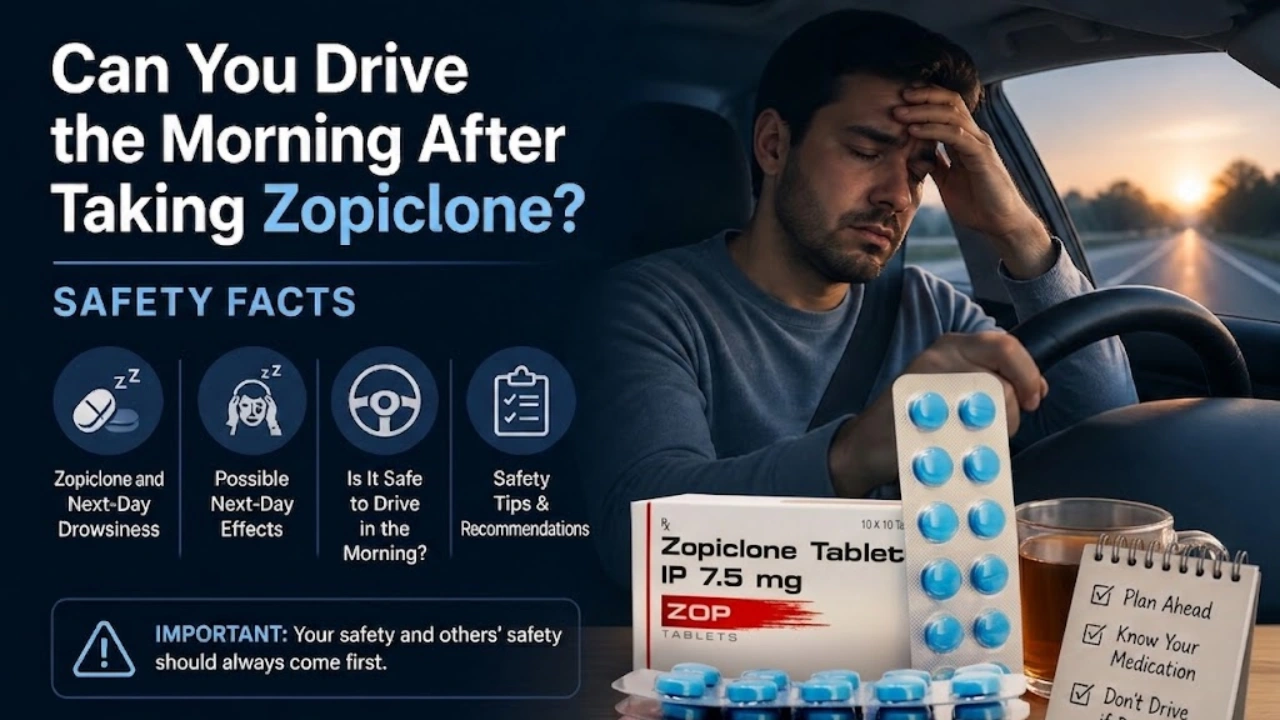
You took Zopiclone last night. You slept. Now it's morning, and you have somewhere to be — a school run, a commute, a client meeting. The question running through your head is a common one:
"Am I safe to drive the morning after taking Zopiclone?"
It's not a simple yes or no — and the answer could affect your safety, your licence, and your legal standing.
This article covers exactly what you need to know — the science behind Zopiclone's effects on driving, UK legal guidelines, and practical advice for staying safe.
How Long Does Zopiclone Stay in Your System?
Understanding Zopiclone's pharmacology is key. The medication has a half-life of approximately 5 hours in healthy adults — meaning it takes around 5 hours for your body to eliminate half the dose.
But elimination doesn't mean impairment ends. Active metabolites of Zopiclone can continue affecting your brain and motor functions well beyond the point where you feel alert.
In older adults, people with liver conditions, or those who took a higher dose, clearance can be significantly slower — making next-morning impairment even more likely.
How Zopiclone Impairs Driving Ability
Even if you feel rested, Zopiclone can impair the cognitive and physical functions that driving demands. Research consistently shows that residual effects can last 10 to 12 hours after a standard 7.5mg dose.
Here's what gets affected:
The "feeling fine" trap: Many people feel alert after a full night's sleep following Zopiclone — but subjective alertness does not equal actual driving competence. Studies show people often overestimate their fitness to drive after sedative use.
What UK Law Says About Driving on Zopiclone
In the UK, the law on drug driving is clear and strict. Under the Drug Driving (Specified Limits) (England and Wales) Regulations 2014, police can test drivers for a range of substances — including those from prescribed medications.
While Zopiclone itself is not listed as a specific controlled drug for roadside testing purposes, the law still covers it under Section 4 of the Road Traffic Act 1988 — which makes it an offence to drive while impaired by any drug, whether legal, prescribed, or otherwise.
If you're caught driving while impaired by Zopiclone, you face:
DVLA and your doctor: If you are prescribed Zopiclone and drive regularly, it is your legal responsibility to inform the DVLA if the medication affects your ability to drive safely. Your prescribing doctor can advise whether you need to notify the DVLA in your situation.
Factors That Affect Morning-After Impairment
Not everyone experiences the same level of next-morning impairment. Several factors influence how significantly Zopiclone affects your ability to drive the following day:
Older adults metabolise Zopiclone more slowly. For those over 65, the recommended dose is 3.75mg — half the standard adult dose — precisely because of prolonged next-day effects.
A 3.75mg dose carries lower next-morning risk than a 7.5mg or 10mg dose. Taking more than prescribed significantly extends impairment duration.
Zopiclone is designed to be taken when you can get a full 7–8 hours of sleep. Waking earlier than that means the drug hasn't fully processed, and impairment will be more pronounced.
Zopiclone is primarily processed by the liver. Any impairment in liver or kidney function slows elimination, meaning the drug — and its impairing effects — linger longer.
Combining Zopiclone with alcohol, opioids, antidepressants, or other sedatives dramatically amplifies sedation and extends the window of impairment into the next day.
Long-term use can lead to accumulation of the drug in body tissues, meaning next-morning effects may worsen over time rather than improve.
What Does the Zopiclone Packet Actually Say?
Patient information leaflets included with Zopiclone in the UK contain direct guidance about driving. The leaflet typically advises:
Do not drive or operate machinery until you have experienced how this medicine affects you. Zopiclone may impair your ability to drive the morning after taking it, especially if you have not had a full night's sleep.
— Standard UK Patient Information Leaflet, ZopicloneThis is not a generic disclaimer — it's a clinical recommendation. Ignoring it may leave you medically and legally exposed if you are involved in an incident.
The "Feeling Fine" Problem — Why You Can't Always Trust Yourself
One of the most dangerous aspects of sedative medication is that impaired individuals consistently rate themselves as fit and alert — even when objective testing shows otherwise.
This is especially true with Zopiclone because:
- It reduces anxiety — you may feel calmer and more confident than you should
- Morning routines (coffee, breakfast, a shower) can create a false sense of complete recovery
- The cognitive effects are subtle enough that you don't notice them — until a situation requires a fast response
- Caffeine masks fatigue but does not neutralise Zopiclone's pharmacological effects on reaction time or coordination
Practical Safety Guidelines for Zopiclone Users Who Drive
If you are prescribed Zopiclone and regularly need to drive, here's how to manage your schedule responsibly:
Safety Checklist for Zopiclone Users
Take it at least 8 hours before you need to drive. If you need to be on the road by 7 AM, the latest safe time to take Zopiclone is 11 PM — and even that carries risk for some individuals.
Avoid Zopiclone on nights before critical early driving. If you know you'll need to drive early the next morning, speak to your doctor about alternative insomnia management for that night.
Never combine with alcohol the same evening. Even one drink increases and prolongs next-morning impairment from Zopiclone significantly.
Discuss your driving schedule with your prescribing doctor. They may be able to recommend the lowest effective dose or suggest dosing on nights that allow for a longer window before driving.
Use public transport or ask someone else to drive on mornings where you have any doubt about your alertness. The inconvenience is a small price compared to the risks.
Do not rely on coffee or cold showers to "sober up." These stimulate the nervous system but do not reduce Zopiclone's pharmacological residual effects on your driving performance.
Frequently Asked Questions
Possibly, but it depends on your individual metabolism, age, and whether you had a full, uninterrupted 7–8 hours of sleep. There's no guaranteed safe window that applies to everyone. When in doubt, don't drive.
No. Caffeine can reduce subjective drowsiness but does not reverse the pharmacological impairment that Zopiclone causes on reaction time and coordination. You may feel more awake but still be impaired.
Current roadside drug screening kits don't test for Zopiclone specifically. However, police can conduct a field impairment assessment and require a blood test. If impairment is detected and Zopiclone is found in your blood, you can still be prosecuted under Section 4 of the Road Traffic Act.
Relatively, yes — the lower dose clears the system faster and has a shorter duration of effect. However, it still carries next-morning impairment risk, particularly in elderly users or those who wake before a full night's sleep.
If your job involves driving and Zopiclone impairs your ability to do so safely, you have a duty of care obligation. Speak with your doctor and, if necessary, the DVLA. Professional drivers (HGV, PSV) are held to a higher standard and may need to declare the medication to their licensing authority.
Final Verdict: Should You Drive the Morning After Zopiclone?
The honest answer is: not if you can avoid it — especially within the first 10–12 hours after taking a standard 7.5mg dose.
Even if you feel alert, the science is clear that Zopiclone's residual effects on reaction time, visual tracking, and divided attention create a measurable and real increase in accident risk. Combine that with UK law, which holds you legally responsible for driving while impaired by any drug, and the case for caution becomes even stronger.
The safest rule to follow:
If you took Zopiclone last night and you're unsure whether enough time has passed, choose an alternative to driving. The risk is not worth it — to you, your passengers, or other road users. Always speak to your doctor if Zopiclone is regularly affecting your ability to drive safely; there may be dosage adjustments or alternative treatments that suit your lifestyle better.
Good sleep is important. Road safety is non-negotiable.