Sleep plays a vital role in maintaining physical health, mental well-being, and overall quality of life. However, many people struggle with insomnia or disrupted sleep patterns due to stress, anxiety, lifestyle habits, or medical conditions. One medication commonly prescribed to help with sleep problems is Zopiclone. While it is widely used, many people are unsure how Zopiclone actually affects sleep quality and duration.
In this article, we will explain how Zopiclone works, its impact on different stages of sleep, how it affects total sleep time, and what users should know before taking it. The information is presented in a simple and easy-to-understand manner for a general audience.
What Is Zopiclone?
Zopiclone is a prescription sleeping medication mainly used for the short-term treatment of insomnia. It belongs to a group of medicines known as non-benzodiazepine hypnotics, often referred to as “Z-drugs.”
Doctors usually prescribe Zopiclone to people who have difficulty:
-
Falling asleep
-
Staying asleep
-
Waking up too early
Zopiclone works on the brain to help calm nerve activity, making it easier to fall asleep and stay asleep for longer periods.
How Zopiclone Works in the Brain
Zopiclone acts on GABA receptors in the brain. GABA (gamma-aminobutyric acid) is a natural chemical that reduces brain activity and promotes relaxation.
By enhancing the effect of GABA, Zopiclone:
-
Slows down brain activity
-
Reduces mental alertness
-
Encourages drowsiness
This calming effect helps users fall asleep faster and reduces nighttime awakenings.
Impact of Zopiclone on Sleep Quality
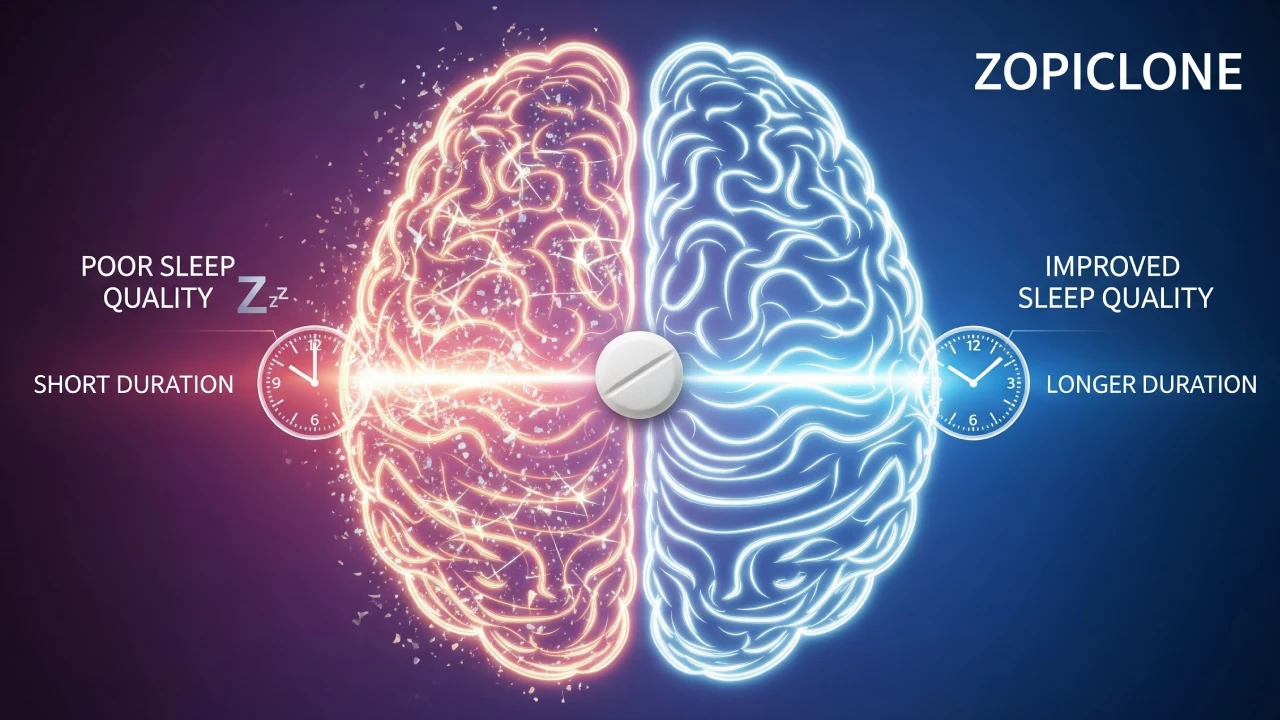
Sleep quality refers to how restful and refreshing sleep feels, not just how long a person sleeps. Zopiclone can influence sleep quality in several ways.
Helps You Fall Asleep Faster
One of the most noticeable effects of Zopiclone is a reduction in sleep onset time. Many users fall asleep within 30 to 60 minutes after taking the medication. This is especially helpful for people who lie awake for hours due to racing thoughts or anxiety.
Reduces Night-Time Awakenings
Zopiclone helps maintain sleep by reducing frequent awakenings during the night. This leads to more continuous and uninterrupted sleep, which is essential for feeling rested in the morning.
Improves Perceived Sleep Quality
Because users experience fewer disruptions and fall asleep more easily, many report that their sleep feels deeper and more satisfying. This improved perception of sleep quality can positively affect mood and daily functioning.
How Zopiclone Affects Sleep Duration
Sleep duration refers to the total amount of time spent sleeping during the night. Zopiclone often helps increase total sleep time, especially in people with insomnia.
Longer Total Sleep Time
Zopiclone can extend sleep duration by:
-
Helping users fall asleep sooner
-
Preventing early-morning awakenings
Many people who previously slept only 3–4 hours may find they sleep for 6–7 hours after taking Zopiclone.
Consistent Sleep Patterns
Short-term use of Zopiclone can help reset irregular sleep schedules by promoting more consistent bedtimes and wake times. This can be helpful during periods of acute stress or temporary insomnia.
Effects of Zopiclone on Sleep Stages
Sleep is made up of different stages, including light sleep, deep sleep, and REM (rapid eye movement) sleep.
Light and Deep Sleep
Zopiclone tends to:
-
Increase time spent in light and deep sleep
-
Reduce frequent transitions between sleep stages
Deep sleep is important for physical recovery and immune function, so this effect can be beneficial.
REM Sleep Changes
Some studies suggest that Zopiclone may slightly reduce REM sleep, especially with regular use. REM sleep is linked to dreaming and memory processing. While this reduction is usually mild during short-term use, long-term use may affect sleep balance.
Also Read: Can You Take Zopiclone During the Day for Anxiety?
Short-Term Benefits of Zopiclone
When used as prescribed and for a short duration, Zopiclone can offer several benefits:
-
Faster sleep onset
-
Longer sleep duration
-
Fewer night awakenings
-
Improved daytime alertness due to better rest
-
Reduced frustration and anxiety around sleep
These benefits make Zopiclone effective for short-term insomnia treatment.
Possible Side Effects Related to Sleep Quality
While Zopiclone can improve sleep, it may also cause side effects in some users.
Common Side Effects
-
Bitter or metallic taste in the mouth
-
Morning drowsiness
-
Dry mouth
-
Mild headache
Effects on Next-Day Alertness
Some people may feel groggy or less alert the next morning, especially if:
-
The dose is too high
-
Sleep duration is less than 7–8 hours
-
Alcohol is consumed
This can impact concentration, driving, and work performance.
Risk of Dependence and Tolerance
Zopiclone is intended for short-term use only, usually for 2–4 weeks.
-
Tolerance: Over time, the same dose may become less effective.
-
Dependence: The body may rely on the medication to fall asleep.
-
Rebound Insomnia: Stopping suddenly may cause sleep problems to return temporarily.
Because of these risks, doctors carefully monitor usage and avoid long-term prescriptions.
Who Should Use Zopiclone With Caution?
Zopiclone may not be suitable for everyone. Extra caution is needed for:
-
Older adults
-
People with breathing problems
-
Individuals with liver issues
-
Those taking other sedative medications
Always follow medical advice and never increase the dose without consulting a healthcare professional.
Tips to Improve Sleep While Using Zopiclone
To get the best results and protect sleep quality:
-
Take Zopiclone only when you can sleep for 7–8 hours
-
Avoid alcohol while using the medication
-
Maintain a consistent bedtime routine
-
Limit screen time before bed
-
Use Zopiclone alongside healthy sleep habits
Medication works best when combined with good sleep hygiene.
Conclusion
Zopiclone can have a positive impact on sleep quality and duration, especially for people struggling with short-term insomnia. By helping users fall asleep faster, stay asleep longer, and reduce nighttime awakenings, it can improve overall rest and daytime functioning.
However, Zopiclone is not a long-term solution. Its benefits are most effective when used responsibly, for short periods, and under medical supervision. Understanding how it affects sleep stages, duration, and next-day alertness can help users make informed decisions and maintain healthier sleep patterns.
Also Read: Can Insomnia Cause Depression? Understanding the Strong Connection