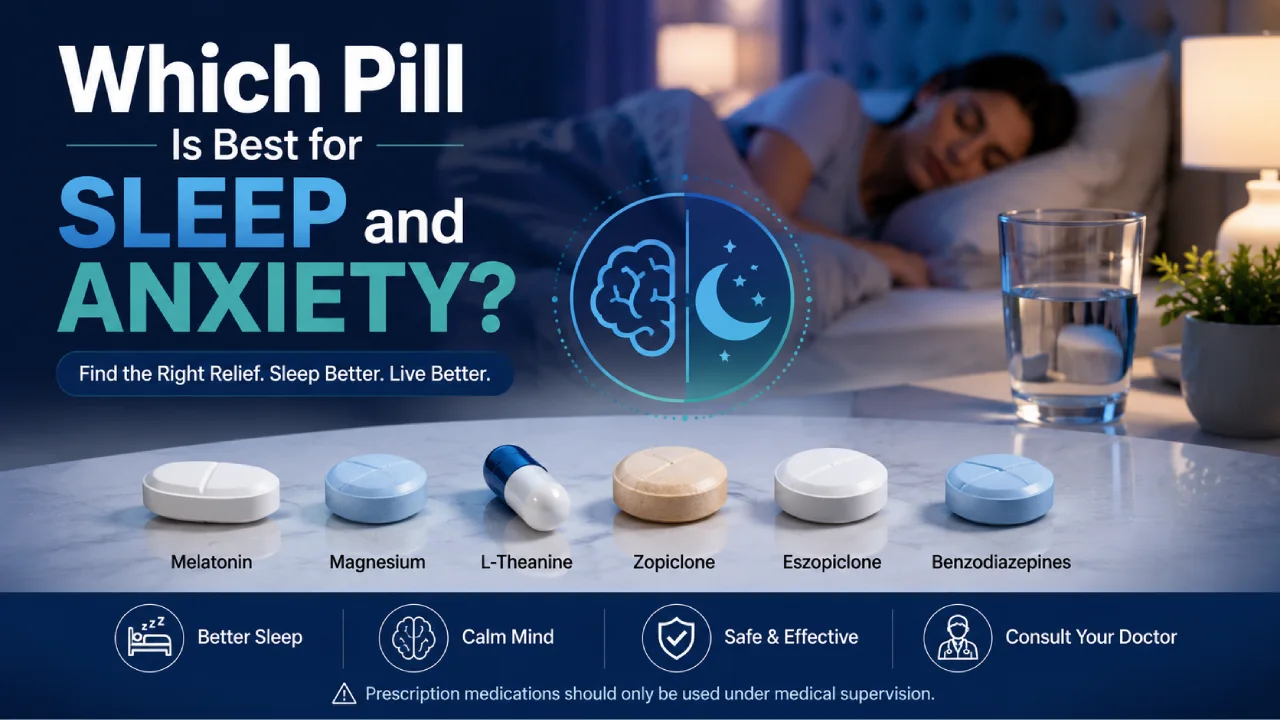
If you’re lying awake at 3 a.m. with your heart racing and your mind spiralling, you’re not alone. Anxiety and insomnia are two of the most common health complaints in the UK, and they often feed each other in a vicious cycle. The question millions of Britons ask every year is simple: which pill is best for sleep and anxiety?
The answer isn’t one-size-fits-all. The best sleeping pill for you depends on your symptoms, medical history, and whether your primary issue is falling asleep, staying asleep, or calming an overactive mind. In this guide, we’ll break down the most effective sleep and anxiety medications available in the UK, compare their benefits and risks, and explain why Zopiclone remains one of the most trusted options for short-term relief.
Understanding the Sleep-Anxiety Connection
Before choosing a pill, it’s important to understand why anxiety and insomnia so often go hand in hand. When you’re anxious, your body produces excess cortisol and adrenaline — hormones designed to keep you alert. This makes it nearly impossible to relax enough to drift off. Conversely, sleep deprivation lowers your brain’s ability to regulate emotions, making anxiety worse the next day.
Research shows that treating the sleep component often reduces anxiety symptoms significantly. That’s why doctors frequently prescribe sleeping tablets not just for insomnia, but as part of a broader anxiety management plan.
The Main Types of Sleep and Anxiety Medications in the UK
The UK offers several categories of medications for sleep and anxiety. Here’s how they compare:
1. Benzodiazepines (e.g., Diazepam, Temazepam)
Benzodiazepines are among the oldest prescription sleep and anxiety medications. They work by enhancing the effect of GABA, a calming neurotransmitter in the brain. While effective, they carry a high risk of dependence and are generally only prescribed for very short periods.
Pros: Fast-acting, highly effective for both sleep and anxiety Cons: High dependency risk, withdrawal symptoms, daytime drowsiness, memory issues
2. Z-Drugs: Zopiclone and Zolpidem
Z-drugs are non-benzodiazepine hypnotics that act on the same GABA-A receptors but with a more selective mechanism. In the UK,
zopiclone (brand name Zimovane) and
zolpidem (Stilnoct) are the two main Z-drugs licensed for prescription.
Clinical studies have shown that zopiclone increases total sleep time and improves sleep efficiency, with a half-life of around 5 hours — making it effective for both sleep onset and sleep maintenance.
Compared to zolpidem, zopiclone has been shown to augment stage 2 sleep and reduce total wake time, while zolpidem’s effects are more concentrated in the first 150 minutes after dosing.
Pros: Effective for sleep onset and maintenance, less dependency risk than benzodiazepines, shorter half-life reduces morning grogginess
Cons: Possible metallic taste, headache, dizziness; should only be used short-term
3. Melatonin (Circadin)
Melatonin is a natural hormone that regulates your sleep-wake cycle. In the UK, it’s typically prescribed for adults over 55 with insomnia. While safe, research suggests it has very limited effectiveness for treating chronic insomnia compared to prescription options.
Pros: Natural, minimal side effects, non-habit forming Cons: Limited effectiveness for severe insomnia, not suitable for anxiety
4. Antihistamines (e.g., Nytol, Phenergan)
Over-the-counter antihistamines like diphenhydramine and promethazine are commonly used for short-term sleep problems. They work by blocking histamine receptors, which promotes drowsiness.
Pros: Available without prescription, inexpensive
Cons: Can cause daytime grogginess, tolerance develops quickly, less effective for anxiety
5. Herbal and Natural Supplements
Valerian root, passionflower, magnesium, and 5-HTP are popular natural alternatives. While some people find them helpful, the scientific evidence supporting their effectiveness for clinical insomnia and anxiety is limited.
Pros: Natural, widely available, minimal side effects
Cons: Inconsistent results, not regulated as strictly as medications
So, Which Pill Is Actually Best?
If your insomnia is linked to anxiety and you need reliable, fast-acting relief, Zopiclone consistently ranks as one of the best options available in the UK. Here’s why:
Dual Action on Sleep and Anxiety: Zopiclone is classified as a cyclopyrrolone hypnotic. It enhances GABA transmission in the central nervous system, producing both sedative and mild anxiolytic effects. This makes it particularly effective when racing thoughts and worry are keeping you awake.
Proven Sleep Architecture Benefits: Unlike some sleep aids that simply knock you out, zopiclone improves actual sleep quality. It reduces sleep latency (time to fall asleep), decreases nighttime awakenings, and increases total sleep time — all critical factors when anxiety is disrupting your rest.
Shorter Half-Life, Less Hangover: With a half-life of approximately 5 hours, zopiclone is less likely to leave you feeling groggy the next morning compared to longer-acting benzodiazepines.
Zopiclone Dosage: What UK Patients Should Know
In the UK, zopiclone is available in two standard strengths:
Doctors recommend taking zopiclone just before bedtime, ensuring you have 7–8 hours available for sleep. It’s important to follow your prescriber’s instructions exactly, as misuse can lead to dependence or unwanted side effects.
Common side effects include a metallic or bitter taste, dry mouth, and mild drowsiness. More serious side effects are rare when the medication is used as directed.
How to Use Sleeping Pills Safely for Anxiety and Insomnia
Even the best sleeping pill won’t solve underlying anxiety on its own. For the best results, combine medication with these evidence-based strategies:
Cognitive Behavioural Therapy for Insomnia (CBT-I) — Considered the gold standard first-line treatment, CBT-I addresses the root causes of sleep problems rather than just masking symptoms.
Sleep Hygiene Improvements — Keep a consistent bedtime, limit screen exposure 1 hour before bed, avoid caffeine after midday, and create a cool, dark sleeping environment.
Stress Management Techniques — Deep breathing, progressive muscle relaxation, and mindfulness meditation can significantly reduce pre-sleep anxiety.
Short-Term Medication Use — Sleeping pills like zopiclone are most effective when used for 2–4 weeks while you implement longer-term lifestyle changes.
Where to Buy Genuine Zopiclone in the UK
If you’ve been prescribed zopiclone or are considering it as a treatment option, sourcing genuine medication is critical. The UK has strict regulations around prescription sleeping tablets, and buying from unverified sources puts your health at risk.
For those looking to
buy Zopiclone online in the UK, it’s essential to choose a provider that offers genuine products, secure ordering, and discreet delivery. Reputable suppliers stock both
Zopiclone 7.5mg and
Zopiclone 3.75mg from licensed manufacturers like Intas Pharma and Hab Pharma, ensuring you receive medication that meets strict clinical standards.
When purchasing online, always verify that the pharmacy is registered and that products come in original packaging with proper dosage information. Free UK delivery and secure payment processing are also markers of a trustworthy supplier.
Final Verdict: The Best Pill for Sleep and Anxiety in the UK
After comparing all available options — from benzodiazepines and melatonin to herbal supplements and antihistamines — Zopiclone stands out as the best-balanced solution for UK adults struggling with both sleep and anxiety. It offers:
✅ Fast, reliable sleep onset
✅ Improved sleep maintenance through the night
✅ Mild anxiolytic effects that calm racing thoughts
✅ A favourable safety profile when used short-term
✅ Strong clinical evidence and high patient satisfaction
If anxiety is robbing you of sleep night after night, speaking to your GP about zopiclone could be the first step toward reclaiming your rest — and your peace of mind.
Medical Disclaimer: This article is for informational purposes only and does not constitute medical advice. Always consult a qualified healthcare provider before starting any medication. Sleeping pills should only be used as directed and for short-term treatment of insomnia.