
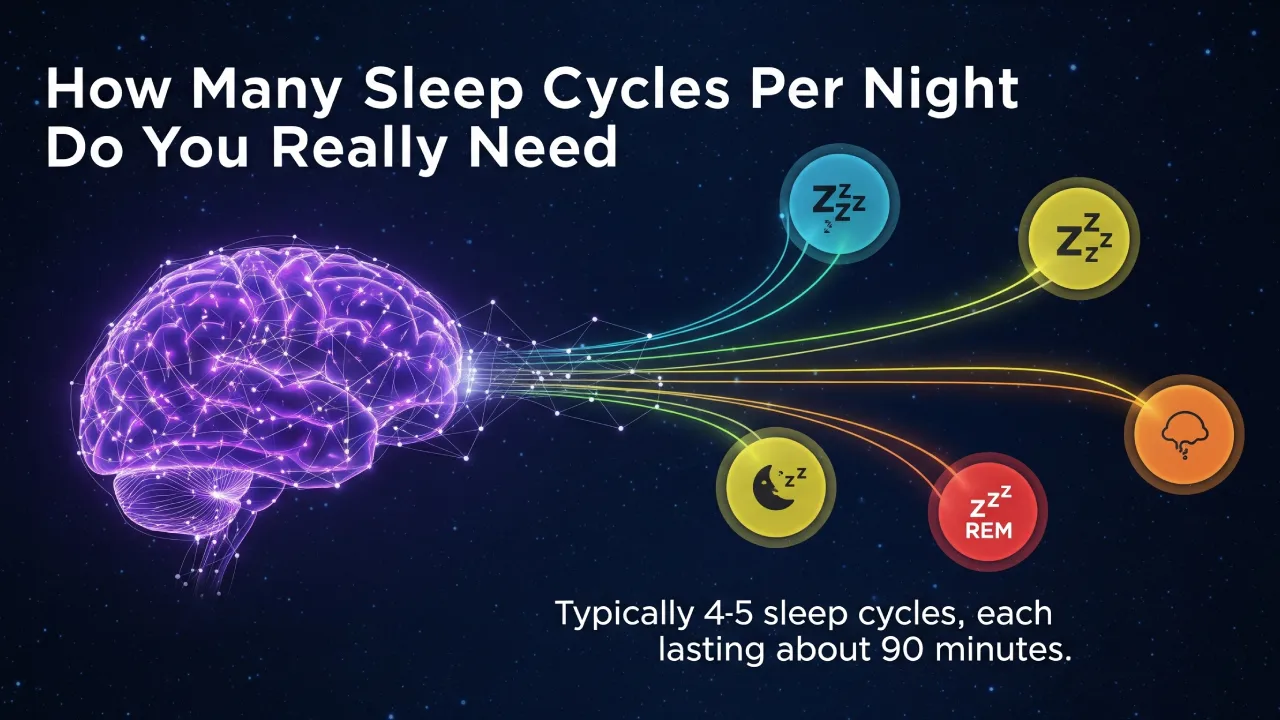
Sleep plays a vital role in our physical and mental well-being, yet many people still struggle to understand how sleep works and how much rest their bodies truly need. Instead of focusing only on “hours of sleep,” it’s equally important to understand sleep cycles—the natural rhythm your brain moves through during the night.
This article explains how many sleep cycles you need per night, how sleep cycles work, and how to adjust your sleep patterns if you struggle with irregular or disrupted sleep. With simple explanations and practical tips, you’ll learn how to build healthier sleeping habits for long-term wellness.
What Is a Sleep Cycle?
A sleep cycle is a complete progression through the different stages of sleep, including light sleep, deep sleep, and REM sleep (Rapid Eye Movement). One full sleep cycle typically lasts 90 minutes.
Each cycle includes:
1. Light Sleep (Stages 1 & 2)
- Your mind begins to relax
- Breathing slows down
- Muscles loosen
This stage prepares your body for deep rest.
2. Deep Sleep (Stage 3)
- Physical recovery takes place
- Your immune system strengthens
- Tissues repair
Deep sleep is essential for feeling refreshed and energized.
3. REM Sleep
- This is when dreaming occurs
- Your brain processes emotions and memories
- Cognitive function improves
REM sleep supports mental clarity, learning, and emotional balance.
A healthy night’s rest includes multiple sleep cycles, each offering its own benefits.
How Many Sleep Cycles Per Night Should You Have?
Most adults experience 4 to 6 sleep cycles per night. Since one cycle lasts about 90 minutes, this equals roughly 6 to 9 hours of total sleep.
Here’s a simple breakdown:
| Sleep Cycles | Total Sleep Needed |
|---|---|
| 4 cycles | ~6 hours |
| 5 cycles | ~7.5 hours |
| 6 cycles | ~9 hours |
Most people feel their best with 5 complete sleep cycles, or about 7.5 hours of continuous sleep.
How Many Sleep Cycles Do I Need?
Your ideal number of sleep cycles depends on factors like age, activity level, stress, and overall health.
Adults (18–60 years)
-
5 cycles (7.5 hours) is ideal for most
-
Some people do well with 4 cycles (6 hours)
-
Others may need 6 cycles (9 hours) if highly active or under stress
Teens
-
Need 6–7 cycles due to rapid brain development
Older Adults
-
Often require 4–5 cycles, but sleep may be lighter or more fragmented
Athletes
-
Benefit from 6 cycles, as deep sleep supports recovery
If you wake up feeling refreshed, alert, and mentally sharp, you’re likely completing enough sleep cycles.
Why Sleep Cycles Matter More Than Just Hours
You can sleep for 8 hours, but if your sleep is interrupted, the number of cycles completed decreases. This leads to:
- Daytime fatigue
- Irritability
- Poor focus
- Slow reaction times
- Weak immune response
Completing full sleep cycles helps your brain and body complete vital repair processes. Waking up in the middle of a cycle often causes grogginess, while waking at the end of a cycle helps you feel energized.
Best Time to Sleep for Complete Sleep Cycles
To maximize your cycles, consider your wake-up time and count backward in 90-minute intervals.
For example, if you must wake at 7:00 AM, ideal sleep times are:
- 10:30 PM (for 5 cycles)
- 12:00 AM (for 4 cycles)
- 9:00 PM (for 6 cycles)
This method helps you wake naturally at the end of a cycle, reducing morning tiredness.
Also Read: How Long Does Zopiclone 3.75 Take to Work? A Complete Guide to Faster, Safer Sleep
How to Change Sleep Patterns (Reset Your Sleep Schedule)
If you often stay up late, wake at random times, or feel constantly tired, your sleep cycles may be out of sync. Changing sleeping patterns takes consistency, but it’s completely achievable.
Here are simple, effective steps:
1. Set a Fixed Wake-Up Time
Choose a wake-up time and stick to it—even on weekends.
This trains your internal clock to maintain stable cycles.
2. Gradually Adjust Your Sleep Time
If you need to sleep earlier, shift your bedtime by 15–20 minutes per night until you reach your goal.
Sudden changes often lead to frustration and insomnia. Slow transitions work best.
3. Create a Sleep-Friendly Environment
Make your room comfortable for rest:
- Cool temperature
- Dark lighting
- Quiet surroundings
- Clean bedding
A calm environment supports smoother transitions through sleep stages.
4. Reduce Screen Time at Night
Phones and laptops emit blue light that suppresses melatonin—the hormone that regulates sleep.
Try to avoid screens 1 hour before bedtime to support natural sleep cycles.
5. Avoid Caffeine in the Evening
Caffeine blocks sleep signals and delays REM cycles.
Avoid coffee, tea, chocolate, and energy drinks after 5 PM.
6. Get Daylight and Physical Activity
Exposure to natural light in the morning strengthens your circadian rhythm.
Walking, exercising, or simply stepping outside resets your body clock.
7. Use Relaxation Techniques
Try:
- Deep breathing
- Meditation
- Warm showers
- Light stretching
- Reading a book
These activities help your mind transition smoothly into the first sleep stage.
8. Avoid Long Daytime Naps
Naps longer than 30 minutes interfere with your night-time sleep cycles.
Short power naps are fine—but avoid evening naps.
9. Be Consistent
Consistency is the most important factor in changing sleep patterns.
Repeating healthy habits trains your internal clock to produce stable sleep cycles.
Sleeping Pattern Change: How Long Does It Take?
Changing your sleeping pattern does not happen overnight.
Most people need:
- 3–7 days for minor adjustments
- 2–3 weeks for a new stable sleep schedule
- 6–8 weeks for long-term circadian improvements
Stability is achieved faster when you consistently follow the same routine.
Common Signs Your Sleep Cycles Are Out of Sync
You may need a sleeping pattern change if you experience:
- Waking up tired
- Midday sleepiness
- Mood swings
- Trouble concentrating
- Difficulty falling asleep
- Waking frequently at night
These symptoms indicate irregular or incomplete sleep cycles.
Tips to Maintain Healthy Sleep Cycles Long-Term
- Sleep and wake at the same time
- Keep your bedroom cool and dark
- Limit heavy meals before bed
- Get sunlight every morning
- Exercise regularly
- Avoid stressful activities late at night
- Keep electronics out of the bedroom
Small changes lead to major improvements over time.
Conclusion
Understanding how many sleep cycles you need per night helps you build a healthier, more consistent sleeping pattern. Most adults require 4–6 sleep cycles, equal to 6–9 hours of quality sleep. If your sleeping pattern is irregular, you can improve it with small, consistent habits like adjusting your bedtime gradually, limiting screen time, and maintaining a steady wake-up time.
Good sleep is not just about the number of hours—it’s about completing full sleep cycles that support your mind, body, and long-term well-being.
Also Read: What to Do If Zopiclone No Longer Helps You Sleep