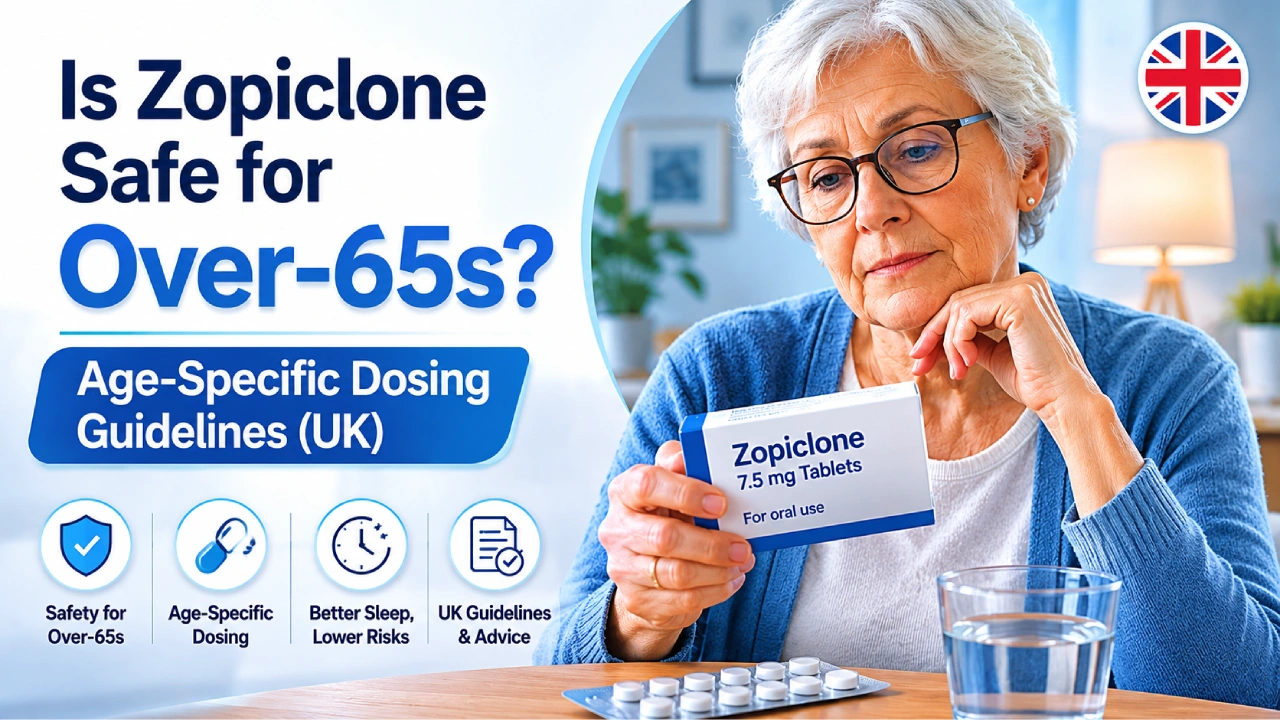
Zopiclone can be prescribed to adults over 65, but with significant restrictions. The NHS recommends a lower starting dose of 3.75mg (half the standard adult dose) and warns that elderly patients face heightened risks of falls, fractures, cognitive impairment, and next-day sedation. Some NHS trusts even exclude patients over 65 from certain prescribing pathways altogether, requiring specialist geriatric assessment instead.
Official Age-Specific Dosing Guidelines
NHS Standard Guidance
The NHS officially recommends:
| Patient Group | Starting Dose | Maximum Dose | Duration |
|---|---|---|---|
| Adults (18–65) | 7.5mg at bedtime | 7.5mg | 2–4 weeks maximum |
| Over 65s | 3.75mg at bedtime | 7.5mg (if tolerated) | 2–4 weeks maximum |
| Liver/kidney impairment | 3.75mg | 7.5mg (with caution) | 2–4 weeks maximum |
The NHS explicitly states: “A lower dose of 3.75mg may be recommended to begin with if you’re over 65 years old or have kidney or liver problems. Taking a lower dose in these cases reduces the risk of excessive sleepiness and other side effects.”
NCBI Evidence-Informed Ceiling Dose
A comprehensive NCBI review on improving Zopiclone prescribing goes further, recommending a ceiling dose of 5mg for people over 65—not just a lower starting point, but a permanently reduced maximum:
“Initiate zopiclone at 3.75 mg/day, and do not exceed 7.5 mg/day (5 mg/day for people over 65), and warn patients about next-day impairment.”
Australian Regulatory Guidance
The Australian product information for APO-Zopiclone reinforces these precautions:
- Initial dose for elderly/debilitated patients: 3.75mg
- Maximum dose if 3.75mg insufficient: 7.5mg, BUT with explicit warning that “25% of elderly patients treated with zopiclone experienced CNS side-effects at the higher dose”
- Special warning: “Prolonged use of hypnotics is not recommended especially in the elderly”
Why the Elderly Face Higher Risks
1. Altered Pharmacokinetics
Older adults metabolise Zopiclone more slowly due to reduced liver and kidney function. This leads to:
- Higher peak plasma concentrations even at standard doses
- Longer drug half-life (Zopiclone’s 5–6 hour half-life extends further in geriatric patients)
- Accumulation with repeated dosing, increasing sedation over time
2. Increased Sensitivity to CNS Effects
The elderly brain is more sensitive to GABA-ergic drugs. A PMC systematic review found that even at reduced doses, Z-drugs like Zopiclone cause significant balance dysfunction in older adults, though cognitive effects were less pronounced than in younger populations.
3. Falls and Fractures: The Biggest Danger
A major Canadian cohort study of nursing home residents (mean age 85.7) found that Zopiclone use was associated with similar rates of injurious falls and major osteoporotic fractures as trazodone—both carrying substantial risk. The study concluded:
“Trazodone, zopiclone, benzodiazepines, and atypical antipsychotics are all associated with a similar risk of harm from injurious falls and fractures in this patient population.”
4. Next-Day Psychomotor Impairment
A 2012 PMC review on Z-drugs warned specifically:
“Psychomotor impairment, falls, and hip fractures are more likely to occur with zopiclone, with its longer half-life, and with higher-than-recommended doses… The risk–benefit analysis of Z-drugs in the treatment of insomnia, particularly in the elderly, may not favor treatment due to the increased risks of falls and motor vehicle collisions.”
NHS Trust-Specific Restrictions
Some UK NHS trusts impose additional restrictions on Zopiclone use in over-65s. The East London NHS Foundation Trust explicitly excludes patients over 65 from their standard Patient Group Direction (PGD) for Zopiclone supply, stating:
“Criteria for exclusion: Patients under 18 years of age or over 65 years of age. Patients over the age of 65 years under the care of Mental Health Care of Older People.”
This means elderly patients in these areas must be assessed by specialist geriatric mental health teams rather than general practitioners or crisis teams.
Safer Alternatives for Over-65s
1. Melatonin (Circadin®)
The NHS and NICE recognise melatonin as a preferred first-line option for older adults. The EPUT NHS formulary notes:
“Melatonin (now available as the licensed product, Circadin®) is indicated for the short-term treatment (thirteen weeks) of primary insomnia specifically in patients over 55… There is an age-related reduction in endogenous melatonin production. Thus, administration of exogenous melatonin is believed (and has been shown) to improve sleep quality in older adults.”
Advantages over Zopiclone:
- No dependence or withdrawal risk
- No next-day sedation or driving impairment
- No falls risk
- Addresses circadian rhythm disruption common in ageing
2. Non-Pharmacological Interventions
Before any sleep medication, the NHS recommends:
- Sleep hygiene education (consistent bedtime, dark cool bedroom, limit caffeine)
- Cognitive Behavioural Therapy for Insomnia (CBT-I) — the gold-standard treatment with superior long-term outcomes
- Relaxation techniques for tension and intrusive thoughts
3. Other Prescription Options (If Necessary)
If medication is unavoidable, discuss with your GP:
- Low-dose trazodone (though similar falls risk, may be better tolerated in some patients)
- Ramelteon (melatonin receptor agonist, non-habit-forming)
- DORAs (Dual Orexin Receptor Antagonists) like daridorexant — newer class with lower abuse potential
Red Flags: When Zopiclone Should Never Be Used in Over-65s
According to NHS and regulatory guidance, Zopiclone is contraindicated or requires extreme caution in elderly patients with:
| Condition | Risk |
|---|---|
| Dementia or delirium | Worsens confusion, increases fall risk |
| History of falls/unsteady gait | Directly increases fracture risk |
| Severe sleep apnoea | Respiratory depression |
| Respiratory disease/COPD | Breathing suppression |
| Liver or kidney impairment | Drug accumulation |
| Myasthenia gravis | Severe muscle weakness |
| Alcohol or substance abuse history | Dependence risk |
| Already prescribed another hypnotic | Dangerous sedation overlap |
Practical Guidance for Patients and Carers
✅ If Prescribed Zopiclone Over 65:
- Start at 3.75mg only — never the full 7.5mg dose
- Take immediately before bed with 7–8 hours available for sleep
- Never crush or chew tablets (affects absorption)
- Avoid alcohol completely — dangerous sedation overlap
- Do not drive for 12 hours after taking a dose
- Use nightlights and fall mats — prepare the bedroom for safer nocturnal movement
- Review with GP every 2 weeks — Zopiclone should not extend beyond 4 weeks
❌ Never Do:
- Self-increase the dose if 3.75mg seems insufficient
- Combine with other sedatives (antihistamines, opioids, benzodiazepines, alcohol)
- Use long-term — dependence develops quickly, especially in the elderly
- Stop suddenly after prolonged use — risk of rebound insomnia and withdrawal
FAQs for Elderly Patients and Families
Q: Why can’t I just take the normal 7.5mg dose? I’m only 66.
A: Age-related changes in liver metabolism and brain sensitivity mean standard doses produce excessive sedation in older adults. The 3.75mg starting dose is based on pharmacokinetic studies showing dangerous accumulation at higher doses in over-65s.
Q: My GP prescribed 7.5mg. Should I question it?
A: Yes — politely ask whether 3.75mg was considered first. NCBI guidelines specifically recommend a 5mg ceiling for over-65s, and the NHS standard is 3.75mg initial dosing.
Q: Is Zopiclone more dangerous than sleeping tablets I took 20 years ago?
A: Zopiclone is a “Z-drug” marketed as safer than older benzodiazepines, but research shows similar risks of falls, fractures, and cognitive impairment in the elderly. The risk profile is comparable to temazepam and other traditional hypnotics.
Q: What if I’ve been taking Zopiclone for months?
A: Long-term use in over-65s is strongly discouraged. Speak to your GP about a gradual tapering plan — reducing by 3.75mg every 1–2 weeks while introducing CBT-I or melatonin. Abrupt stopping can cause rebound insomnia and anxiety.
Q: Are there any herbal alternatives that are safer?
A: Some patients use valerian or lavender, but these can still interact with medications and cause drowsiness. Melatonin (Circadin®) is the only supplement with robust NHS backing for over-55s. Always discuss herbal remedies with your pharmacist.
Conclusion: A Calculated Risk
Zopiclone is not contraindicated for over-65s in the UK, but it requires a fundamentally different prescribing approach than for younger adults. The evidence is clear:
- Start at 3.75mg (NHS standard)
- Consider a 5mg ceiling (NCBI evidence-informed recommendation)
- Maximum 2–4 weeks use to prevent dependence
- Falls and fractures are the primary dangers, not just next-day grogginess
- Melatonin and CBT-I should be tried first in almost all cases
The bottom line: If you’re over 65 and struggling with insomnia, Zopiclone should be a last resort, not a first choice. Discuss melatonin, sleep hygiene, and CBT-I with your GP before accepting a Zopiclone prescription — and if it is prescribed, insist on the 3.75mg starting dose with a clear 4-week exit plan.
Medical Disclaimer: This article is for informational purposes only and does not constitute medical advice. Always consult a qualified healthcare professional before starting, stopping, or adjusting any medication — especially if you are over 65 or care for an elderly patient.
Related Reading: