
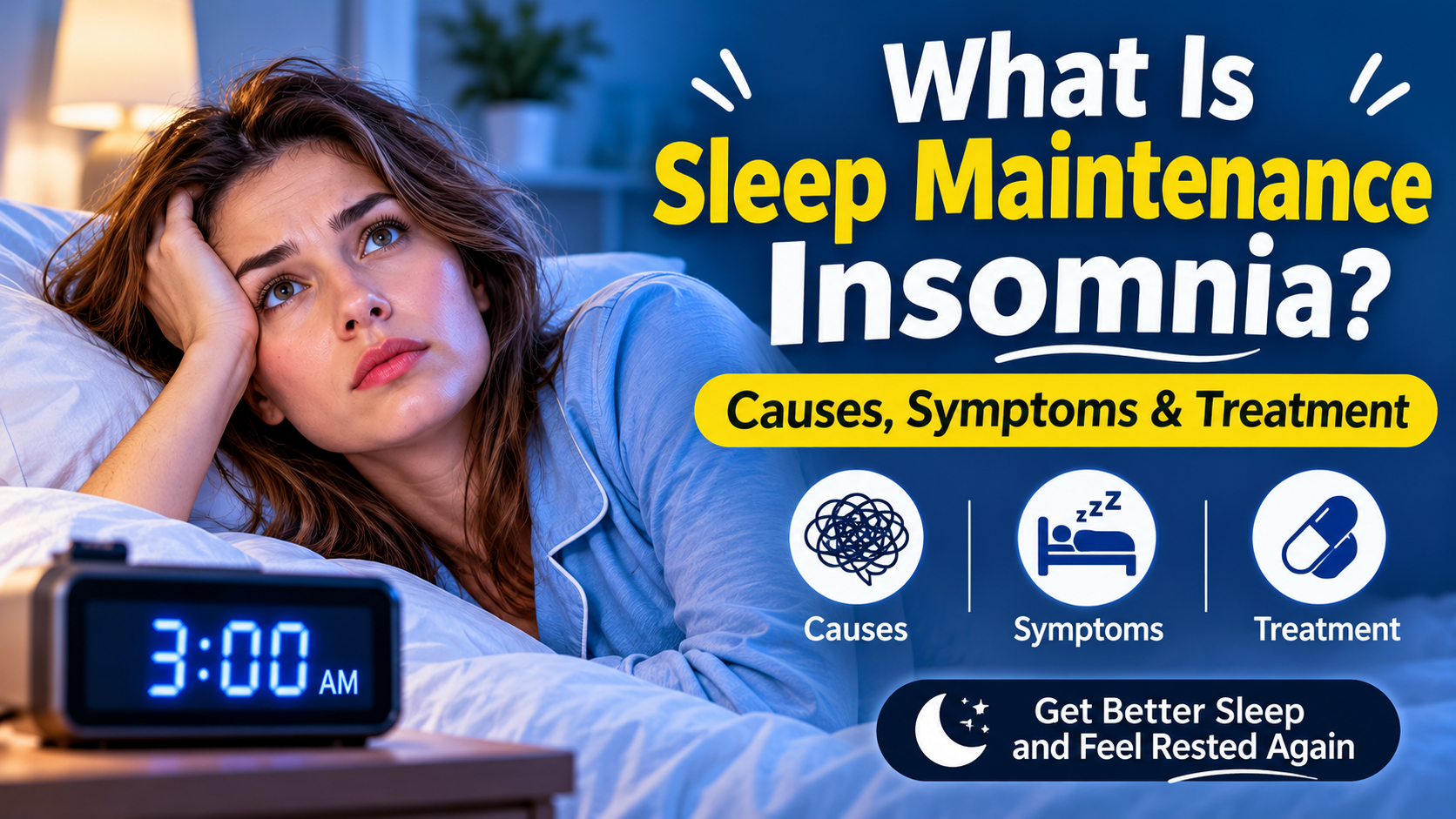
Waking up during the night is common. But if you regularly wake up and struggle to fall asleep again, you may be experiencing sleep maintenance insomnia. This form of insomnia can leave you tired, distracted and frustrated the following day, even when you initially fall asleep without difficulty.
Sleep maintenance insomnia is not simply one restless night. It describes a recurring pattern of difficulty staying asleep or returning to sleep after waking. Understanding possible causes and evidence-based ways to improve sleep can help you decide what to try and when to seek medical advice.
What Is Sleep Maintenance Insomnia?
Sleep maintenance insomnia is a type of insomnia in which a person has difficulty remaining asleep through the night. They may wake several times, stay awake for long periods, or wake earlier than intended and be unable to return to sleep.
It differs from sleep-onset insomnia, where the main problem is falling asleep at the beginning of the night. Some people experience both patterns.
Common Signs and Symptoms
- Waking up repeatedly during the night.
- Taking a long time to fall asleep again after waking.
- Waking earlier than planned and being unable to return to sleep.
- Feeling unrefreshed despite spending enough time in bed.
- Daytime tiredness, irritability, low mood or difficulty concentrating.
- Worrying about sleep or watching the clock during the night.
Symptoms can vary. A clinician will consider how often the problem occurs, how long it has been happening and whether it affects daytime functioning.
What Causes You to Wake Up During the Night?
There is rarely one explanation for every person. Common contributors include:
Stress and anxiety
Stress can make the brain more alert and make it harder to settle back to sleep. Worrying about the next day or about not sleeping can also keep the cycle going.
Sleep habits and environment
Irregular bedtimes, long or late naps, bright light, noise, an uncomfortable room and using screens close to bedtime may interfere with sleep continuity.
Caffeine, nicotine and alcohol
Caffeine and nicotine are stimulants. Alcohol may make someone feel sleepy initially, but it can fragment sleep later in the night. Sensitivity and timing differ between individuals.
Health conditions and medicines
Persistent night waking can be associated with pain, reflux, breathing problems such as sleep apnoea, restless legs, menopause symptoms, urinary symptoms, anxiety or depression. Some medicines can also affect sleep. Do not stop prescribed treatment without speaking to a healthcare professional.
How Is Sleep Maintenance Insomnia Assessed?
A GP or qualified healthcare professional may ask when you wake, how often it happens, how long you remain awake and how you feel during the day. They may review your medical history, medicines, caffeine and alcohol use, and sleep routine.
A sleep diary for one or two weeks can be useful. Record your bedtime, estimated time to fall asleep, night wakings, final waking time, naps and how rested you feel. If symptoms suggest another sleep disorder, your clinician may recommend further assessment.
Evidence-Based Ways to Improve Staying Asleep
1. Keep a consistent wake-up time
Try to get up at roughly the same time every day, including weekends. A steady schedule helps reinforce your body clock. Choose a bedtime that allows enough opportunity for sleep without going to bed unusually early to compensate for a poor night.
2. Make the bedroom comfortable
Keep the room dark, quiet and comfortably cool. Consider blackout curtains or earplugs if light or noise is a problem, and make sure your mattress and bedding are comfortable.
3. Review caffeine, nicotine and alcohol
Notice whether coffee, tea, energy drinks, nicotine or evening alcohol affect your sleep. Consider reducing late-day caffeine and avoiding alcohol as a sleep aid.
4. Wind down before bed
Build a relaxing routine, such as reading, taking a warm bath, listening to calm audio or practising gentle breathing. Reduce stimulating activities and bright screens before bedtime if they make it harder for you to unwind.
5. Avoid clock-watching
Repeatedly checking the time can increase frustration. If you are awake and becoming tense, try a quiet, relaxing activity in dim light until you feel sleepy, then return to bed. Keep the activity calm and avoid bright screens.
6. Consider cognitive behavioural therapy for insomnia (CBT-I)
CBT-I is a structured treatment that helps address thoughts and behaviours that keep insomnia going. It may include stimulus control, sleep scheduling and relaxation strategies. It is recommended as a first-line treatment for persistent insomnia for many adults. A GP can advise on suitable local services or a qualified provider.
When Should You Speak to a GP?
Speak to a healthcare professional if night waking happens regularly, continues for weeks, affects your work or daily life, or is causing significant distress. Seek assessment sooner if you have loud snoring with pauses in breathing, uncomfortable urges to move your legs, severe daytime sleepiness, ongoing pain or symptoms of depression or anxiety.
If you are dangerously sleepy, avoid driving or operating machinery. Do not use alcohol or someone else’s medication to try to make yourself sleep.
Does Waking at 3 AM Mean You Have Insomnia?
Not necessarily. Brief awakenings can occur as part of normal sleep. The important questions are whether you can return to sleep, how often the pattern occurs and whether it affects how you function during the day. Read our related guide, Why Do I Wake Up at 3 AM Every Night?, for more context about common reasons for early-morning waking.
Frequently Asked Questions
Can sleep maintenance insomnia happen even if I fall asleep quickly?
Yes. Some people fall asleep easily but wake during the night and struggle to return to sleep. This is a typical sleep-maintenance pattern.
Is waking once during the night normal?
Brief awakenings can be normal. It becomes more concerning when awakenings are frequent or prolonged, you cannot get enough restorative sleep, or you feel impaired during the day.
Can stress cause repeated night waking?
Yes. Stress and anxiety can increase alertness and make it harder to return to sleep. If worry is persistent or overwhelming, discuss it with a healthcare professional.
What is the best treatment for sleep maintenance insomnia?
The right approach depends on the cause. CBT-I is a well-established treatment for persistent insomnia, while treating an underlying condition and improving sleep habits may also help. A clinician can help identify an appropriate plan.
Key Takeaway
Sleep maintenance insomnia involves repeated or prolonged waking during the night, even when falling asleep initially is not difficult. A consistent routine, a supportive sleep environment and evidence-based treatment such as CBT-I can help. If the problem persists or affects your daily life, speak with a GP rather than self-medicating.
Further Reading
- NHS: Insomnia — symptoms, causes and treatment options.
- NICE: Depression in adults — treatment and management — guidance relevant to mental health support where appropriate.
- US National Heart, Lung, and Blood Institute: Insomnia — an overview of insomnia and its management.
This article is for general information only and is not a substitute for personalised medical advice, diagnosis or treatment.